Services / Film digitization
8mm, Super 8, and 16mm film, inspected, mended, and digitized
Every reel is unwound by hand and checked before it goes near a scanner. That is the step a volume transfer house skips.
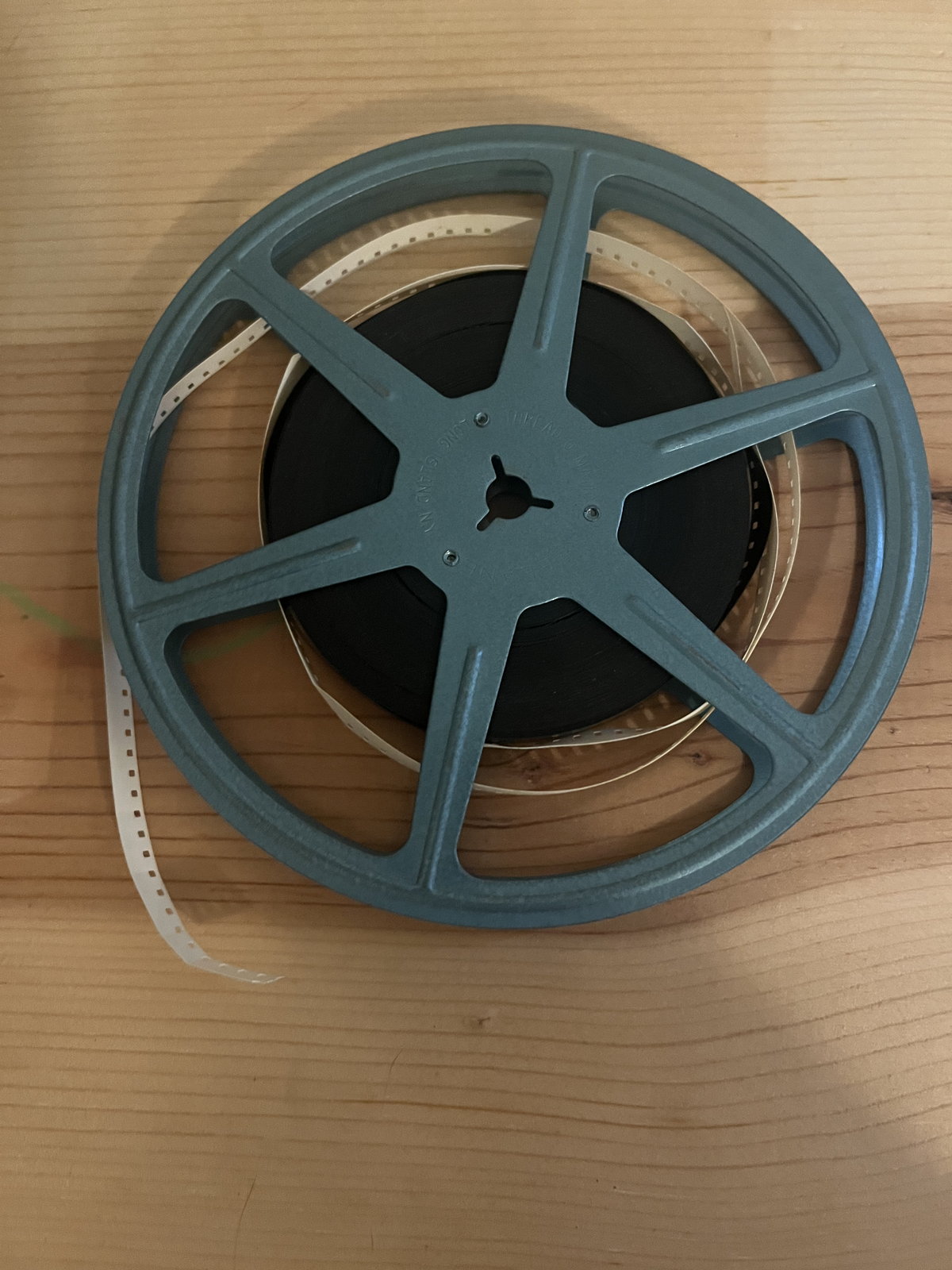
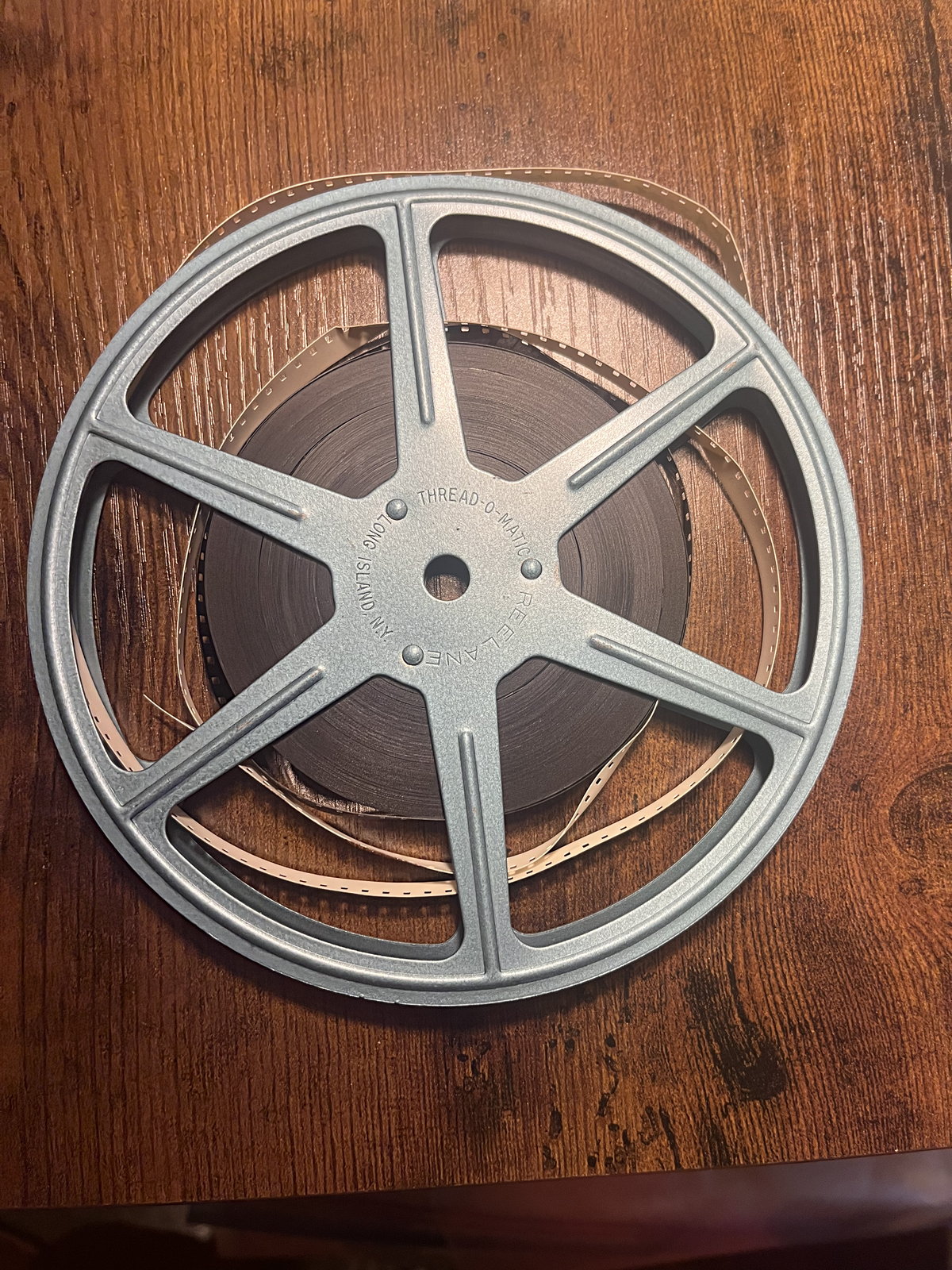
Why film is different
A reel is a physical object first, and a movie second.
Home movie film is acetate, and acetate ages. Over sixty or seventy years it shrinks, so the sprocket holes no longer sit where a machine expects them. Splices made with tape or cement dry out and let go. Reels stored in a hot attic curl into a saucer shape, and film that has started to break down gives off a sharp vinegar smell.
None of that means the footage is lost. It means the reel has to be handled, not just loaded. A volume scanner pulls film through at speed on a fixed sprocket. Shrunken or brittle film fed that way can tear at a splice or lose perforations along the whole length, and there is no second copy to go back to.
So the order of work matters: inspect, mend, clean, and only then capture.
What happens to your reel
Five steps · every reel · no exceptions
-
01
Hand inspection
The reel is wound through by hand on a bench, end to end. Shrinkage is measured, splices counted, damage and mold noted. You get this report whether or not you go ahead.
-
02
Splice mending
Failed tape and cement splices are remade. Torn perforations are mended so the film can be transported without further loss.
-
03
Cleaning
Dust, mold, and old projector oil are removed with film-safe solvent and lint-free cloth, so the scan records the image and not the dirt on top of it.
-
04
Frame-by-frame capture
Sprocketless, each frame is captured as a still image at archival resolution, then assembled. Shrunken film that would jam a projector transports safely this way.
-
05
Description
What is actually on the film: people, places, and dates where they can be identified, written up reel by reel. A transfer house gives you a file. I tell you what is on it.
Training and record
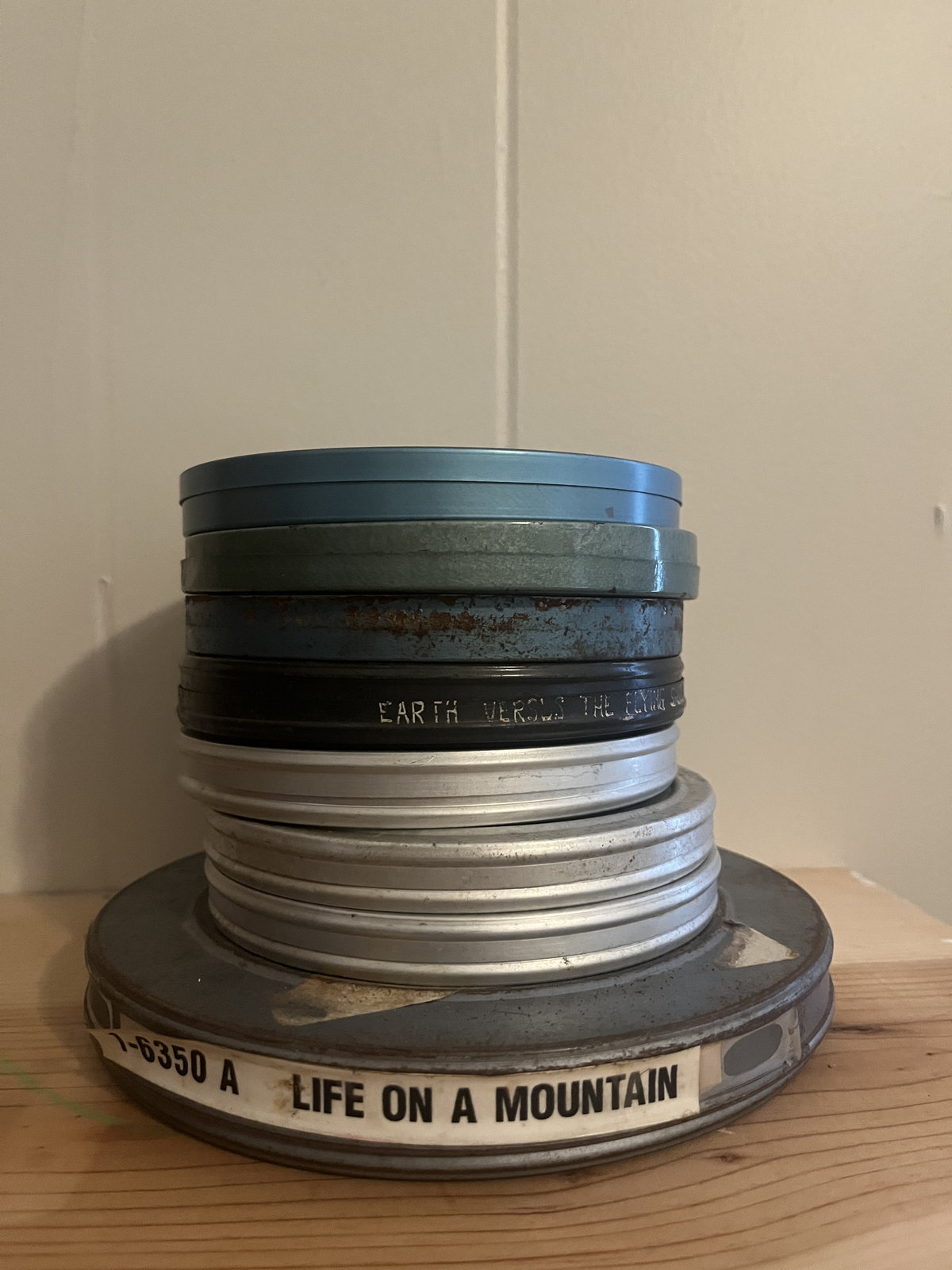
Ten years of handling other people's only copy.
- Training
- MA, Public History, University of New Orleans, archival and preservation specialty. BA, Film & Communications.
- 2015–2025
- Festival projectionist and print traffic: Sundance, True/False, Seattle International, Indie Memphis, and the New Orleans Film Festival.
- Exhibit
- 100+ hours of 16mm, 8mm, and Super 8 inspected, mended, digitized, and researched for “At Home,” The Front Gallery, New Orleans.
Formats and what you get back
Master + access copy, every reel
| Format | Typical condition | Capture | Delivery |
|---|---|---|---|
| Regular 8mm | Shrinkage, brittle cement splices, curl from attic storage. 50 ft reels from the 1930s–70s. | 2K, frame-by-frame, full frame including perforations on request | ProRes 422 HQ · .mov master H.264 · .mp4 access copy |
| Super 8 | Failed tape splices, dried magnetic sound stripe, dye fade on some stocks. 1965 onward. | 2K, frame-by-frame; sound stripe captured where present | ProRes 422 HQ · .mov master H.264 · .mp4 access copy |
| 16mm | Vinegar syndrome, warped cores, optical or magnetic sound. Often institutional or semi-professional. | 2K or 4K, frame-by-frame; optical sound read and synced | ProRes 422 HQ or 4444 · .mov master H.264 · .mp4 access copy |
Files are delivered on a drive you keep, with a reel-by-reel description sheet. Originals come back wound onto archival cores in vented cans, labeled to match the files. Film is priced by the foot: a 3-inch reel is about 50 feet, a 7-inch reel about 400.
How do I know what I have?
Hold the film to the light and look at the holes.
The width of the strip and the shape of the sprocket holes tell you the gauge. The size of the reel tells you roughly how long it runs. If you are not sure, a photo of one reel beside a ruler is enough for me to identify it.
Regular 8mm
8mm wide. Large, nearly square holes along one edge, one per frame, with a small picture. Silent. Reels are 3 in (50 ft, about 4 minutes) to 7 in (400 ft).
1932–1970s · silent
Super 8
Also 8mm wide, but the holes are small and narrow and the picture is noticeably bigger. Came in plastic cartridges; may have a thin brown sound stripe along one edge.
1965–1980s · silent or sound
16mm
Twice the width. Holes on both edges, or on one edge with a sound track running down the other. Reels from 3 in to 14 in; often in metal cans with a typed label.
1923–present · silent or sound
Sending film by mail
Reels travel well if they are packed like the object they are.
Mail-in is open to clients anywhere in the United States. Every package is insured from the moment it arrives until it is back in your hands, and you get a confirmation the day it lands.
- 01
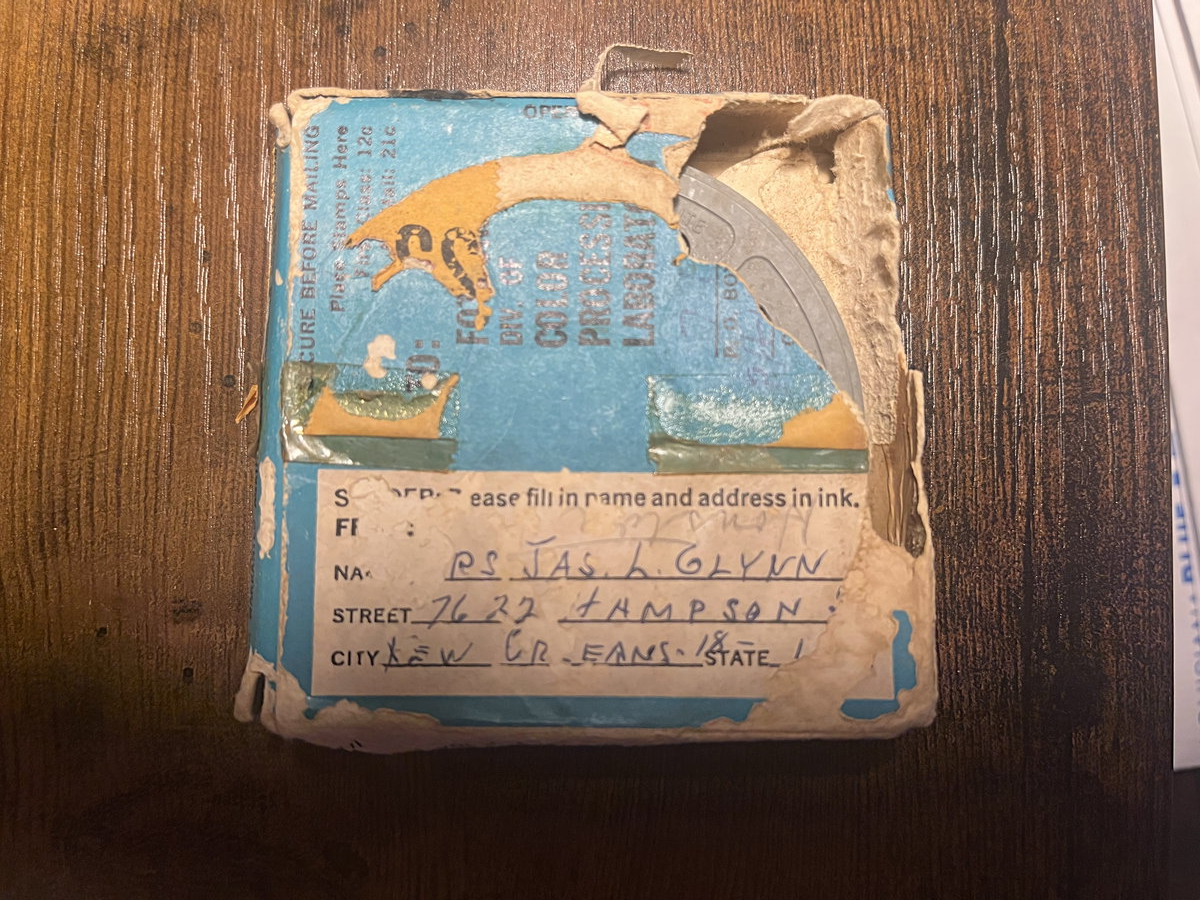
Leave reels in their cans or boxes. Do not re-wind, tape, or clean anything. Original labels are part of the record. Leave them on.
- 02
Wrap each can in paper, not plastic. Pack snugly in a rigid box with at least two inches of padding on every side. Nothing should shift when you shake it.
- 03
Put a note inside with your name, phone, and a count of reels. Photograph the packed box before sealing it.
- 04
Ship with tracking, and avoid a Friday drop-off so film is not sitting in a hot truck over a weekend. Typical turnaround is quoted with your assessment, in writing.
Questions about film
Do I get the original back?
Always. Every reel is returned on an archival core in a vented can, labeled to match its file. Nothing is kept, and nothing is discarded without your say-so.
Can you transfer film that smells like vinegar?
Usually, yes. The smell means the acetate base has begun to break down and the film has likely shrunk. Frame-by-frame capture does not depend on the sprocket holes lining up, so shrunken film that would jam a projector can still be scanned. The sooner, the better: it does not improve with time.
What if the reel is broken or in pieces?
Breaks at old splices are the most common fault there is, and they are mended on the bench before capture. Keep every piece, in the order you found them if you can, and do not tape anything yourself.
The reels have no labels. Is that a problem?
No. Unlabeled film is the normal case. Part of the work is watching what comes off each reel and writing down what it shows, so the file you get back has a name and not just a number.
Should I just use a cheap transfer service?
Sometimes, yes. If you have twenty clean 50-foot reels and you just want to watch them, a volume service will do that well and cost less. Come to me when the film is damaged, shrunken, unlabeled, or the only copy.
Send a photo of your reels for a free assessment.
One picture of the cans beside a ruler answers half the questions. I'll tell you what you have, what condition it is likely in, and what it would take, including if you don't need me.
Email a photo